The 50 Wedding Tasks Nobody Tells You About

Kat Trefilova — CEO & Founder
Key Takeaways
Buried in 90,000+ real wedding tasks are 50 to-dos that never appear on standard checklists — from permit research and passport expiry checks to who bustles the dress.
The planner-only knowledge that trips up DIY couples: venue electrical capacity, vendor insurance certificates, transition time between events, and rain plans you've actually walked through.
Post-wedding tasks are the most forgotten category: rental returns, dress preservation, refundable deposits, and name changes before booking honeymoon travel.
Emotional labor is real work too — plus-one decisions, divorced-parent dynamics, and managing expectations deserve space on the plan.
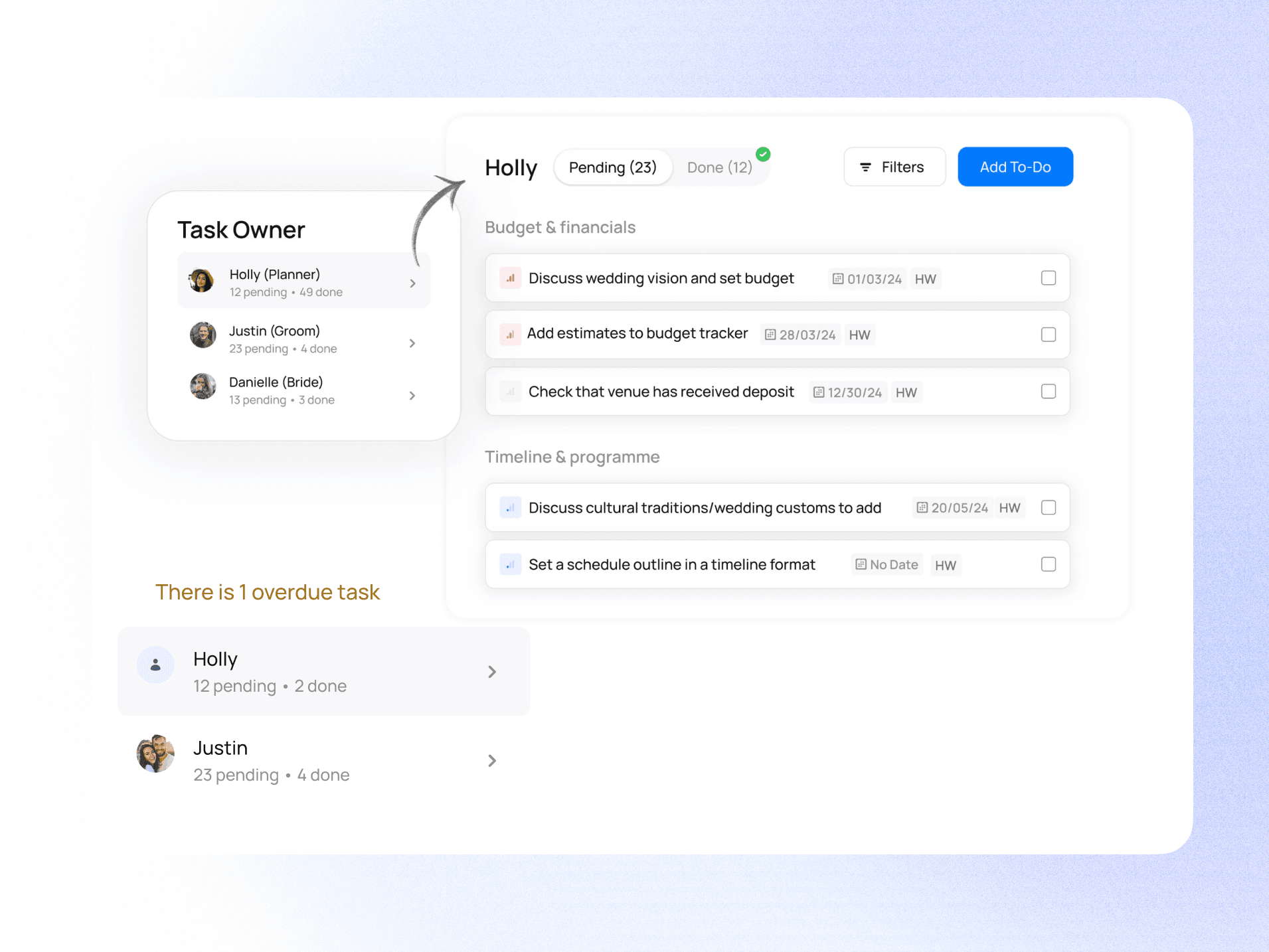
Load these hidden tasks into wedding to-do software with owners and auto-calculated due dates — or bring a CSV of to-dos straight into a specific event with the event-level CSV to-do import — so the same surprise never blindsides you twice.
The 50 Wedding Tasks Nobody Tells You About
Table of Contents
Introduction: The Invisible Checklist
Every wedding planning guide covers the obvious: book a venue, hire a photographer, order a cake. But buried in our analysis of 90,000+ wedding tasks were thousands of items that rarely appear on standard checklists—the tasks that catch couples by surprise, often at the worst possible moment.
This is the list nobody gives you. Until now.
Before You Book Anything
Verify your wedding date doesn't conflict with major sporting events, holidays, or local festivals that could affect venue availability and guest attendance
Check if your preferred date falls on a religious holiday that might prevent certain guests or officiants from participating
Research if permits are required for your ceremony location (beaches, parks, historic sites)
Confirm you meet residency requirements for your marriage license in your chosen location
If destination wedding: verify both of your passports won't expire within 6 months of travel
Vendor Coordination Surprises
Ask every vendor what they need from YOU (insurance certificates, electrical requirements, parking passes)
Confirm who is responsible for vendor meals—and that you've included the count in your catering numbers
Request backup plans from each vendor in case of emergency (illness, equipment failure)
Verify whether your venue has noise ordinances or hard stop times
Ask photographers if they charge travel fees for locations more than X miles from their studio
Confirm cake delivery logistics: who cuts it, where it's stored, what temperature requirements exist
Check if any vendors require day-of gratuities and budget accordingly
Guest Experience Details
Create a system for tracking gifts with descriptions (for thank-you notes)
Designate someone to collect cards and gifts at end of night—and a secure place to store them
Arrange for a coat check if your venue doesn't provide one
Confirm restroom availability and whether portable facilities are needed
If outdoor ceremony: have a plan for elderly guests who can't stand long
Create signage directing guests between ceremony and reception if in different locations
Plan what happens to leftover food (boxed for family? donated?)
Confirm whether guests can take centerpieces home and who will distribute them
The Week Before
Confirm every vendor has the correct address (venue addresses can be tricky)
Provide vendors with emergency contact information (yours and your planner's)
Create a packing list for your wedding night bag (change of clothes, toiletries, phone charger)
Break in your wedding shoes around the house
Arrange for someone to handle social media posting if you want to be unplugged
Notify your bank if traveling internationally for honeymoon (to avoid card blocks)
Confirm your marriage license is signed and you know where to submit it post-wedding
Make copies of your vows (one for you, one for your partner, one for the officiant)
Prepare a tip and payment envelope system, labeled by vendor
Day-Of Hidden Tasks
Assign someone to be the point person for deliveries (florist, rentals, cake)
Designate a holder for the rings (not just the best man—where are they BEFORE the ceremony?)
Have someone prepare a bridal emergency kit (stain remover, safety pins, pain reliever, tissues)
Arrange for someone to bustle your dress after the ceremony
Confirm who will transport gifts and cards home at end of night
Assign someone to tip vendors who require day-of gratuities
Plan when you'll actually eat (hint: you won't eat much at cocktail hour)
Arrange for someone to pack your getting-ready items after you leave
Confirm your getaway transportation and where it will wait
After the Wedding
Return rental suits within the required timeframe (often 1-2 days)
Arrange for wedding dress cleaning and preservation within 1-2 weeks
Follow up on refundable deposits (security deposits, breakage deposits)
Update beneficiaries on insurance policies, retirement accounts
Change name on passport BEFORE booking honeymoon travel
Send photographer a list of must-have people in photos before they start editing
Confirm timeline for photo and video delivery with your vendors
Write and send thank-you notes (data shows couples who set a 'daily quota' finish faster)
Leave reviews for vendors you loved (they often offer incentives)
Store wedding items properly (dress, cake topper, guest book)
The Tasks Planners Know That Couples Don't
Professional planners in our network shared the tasks that trip up DIY couples most often:
Confirming electrical capacity at venues (caterers, DJs, and lighting all need power)
Checking venue insurance requirements and ensuring all vendors carry proper coverage
Creating a detailed floor plan with table numbers, dance floor placement, and flow paths
Building 'transition' time into timelines (the 10 minutes between events nobody accounts for)
Having a rain plan that you've actually walked through, not just acknowledged
Knowing where the venue's circuit breakers are located
Understanding gratuity policies—is it included in contracts or expected additionally?
Confirming the venue's policy on open flames (candles) and hanging décor (florals from ceiling)
The Emotional Labor Nobody Mentions
Beyond logistics, our data revealed 'soft' tasks that can become major stressors:
Managing family expectations and opinions diplomatically
Deciding how to handle plus-ones (and having that conversation)
Navigating divorced parent dynamics in seating and ceremony roles
Addressing cultural or religious differences in ceremony planning
Handling guests who RSVP 'yes' then no-show (and the budget impact)
Managing your own expectations versus Instagram/Pinterest reality
Finding time to actually enjoy being engaged while drowning in decisions
Conclusion: The Real Checklist
Wedding planning is death by a thousand tasks—but it doesn't have to be death by a thousand surprises. By knowing about these hidden to-dos in advance, you can build them into your planning from the start.
Print this list. Share it with your partner. Check items off as you encounter them. And remember: every 'surprise' task you handle calmly is a testament to your planning—and a preview of how you'll handle challenges as a married couple.
Planning weddings professionally? Load these hidden to-dos into wedding to-do software that tracks every task — assign owners, let due dates calculate from the wedding date, and never get blindsided by the same surprise twice. And once one event’s list has caught them all, turn that existing event’s to-dos into a reusable template — due dates adjust relative to each new event’s date — so every future wedding starts with the surprises already on the list.
From meeting to action list: most of these hidden tasks surface mid-conversation — on a consultation call or a venue walkthrough — not while you’re looking at your checklist. Connect Zoom to bring meeting and call recaps straight into TTO Notes, then move each recap to the relevant event and turn the discussion points into to-dos, so nothing a client mentions on a call lives only in your memory.
Already keeping your own hidden-task list in a spreadsheet? Use the event-level CSV to-do import to bring a CSV of to-dos straight into a specific event — all 50 of these can be loaded in one pass.
Further reading:
Try your 30 day free trial here or book a demo.